Architecture first. Data and AI as better preparation.
Fremtidens Tegnestue works with existing buildings, homeowners’ first clarification and studios that want to use AI responsibly. The shared principle is simple: AI can prepare and mark uncertainty. The architect must judge the consequence.
A first reading before the solution becomes too quick.
Many home projects begin with friction: poor light, a difficult plan, cold rooms, damp, lack of space or a house that no longer fits everyday life. FT gathers the house data, the owner’s wishes and the uncertainties before the architect judges the right next step.
For homeownersAI as source-aware preparation, not a professional shortcut.
For architecture studios, FT works with controlled agent pilots, Danish data layers, Byggebrain, local plans, BR18, BBR and project knowledge. Mikkel builds the systems while the architectural responsibility line stays explicit.
Contact about AITwo roles, one responsibility line.
FT sits where architectural judgement meets systematic preparation. The difference between Thais and Mikkel is what makes the method practical.
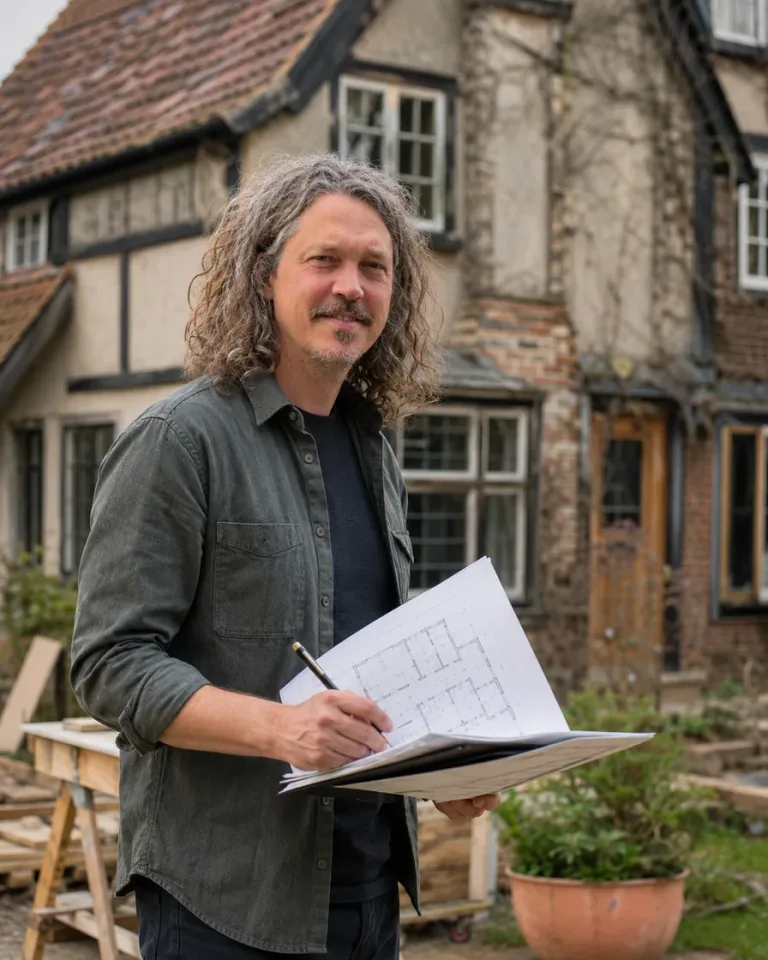
Thais Espersen
Thais carries the architectural judgement: place, proportion, materials, use, existing buildings and the choices that should not be made too early.
Read profile arrow_forward
Mikkel Freltoft Krogsholm
Mikkel builds FT’s data layers, agent flows and Byggebrain, so AI can prepare the work without taking over the architect’s responsibility.
Read profile arrow_forwardTwo childhood friends from Aarhus.
The personal story is not decoration. It helps explain why the collaboration can hold both professional disagreement and new technological directions.
Thais and Mikkel met in Rudolf Steiner kindergarten in Brabrand in the early 1980s. They grew up as close friends through school in Aarhus and spent a lot of time together before life later brought both of them to Zealand.
Their conversations about AI and architecture did not begin with a short trend. They have talked about the field for years, because they could see what was coming. Now the technology is mature enough for them to build it together.
They know each other well enough to be honest, challenge each other and still keep direction. Aarhus has not disappeared either: they still support AGF and go to away games on Zealand, often with their children.
First understand. Then prioritise. Only then design or automate.
For homeowners, this means we do not jump straight to a solution. We read the house, everyday life, sources and uncertainty before recommending the next step.
For studios, this means AI is not sold as a replacement for professional judgement. It is used as a controlled preparation layer around concrete workflows, where sources, stop rules and human validation are visible.
We begin with what already exists
A building is not only a problem to solve. It is a place, an everyday life, a construction and a set of previous decisions that must be understood before new moves make sense.
Data must not sound more certain than it is
Registers, plans, energy labels and other sources can strengthen the first overview. They cannot alone decide architectural consequence, buildability or the right priority.
AI should sharpen architectural judgement
An agent can collect, structure and mark uncertainty. The architect still judges proportion, materials, place, use, risk and responsibility.
See how the method works.
The method explains the relationship between first reading, data, Byggebrain, AI agents and architectural validation.